Is It Legal to Download Social Media Videos? (2026)
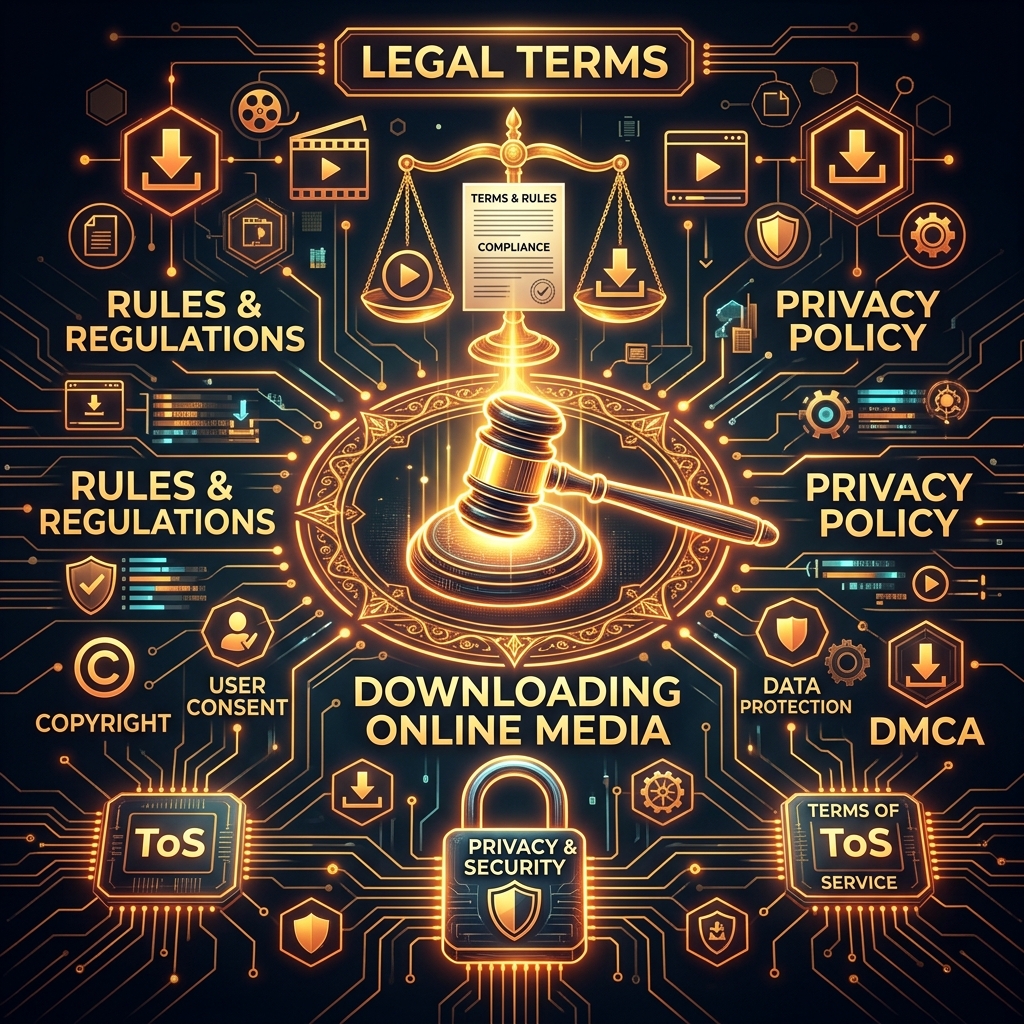
With millions of creators publishing content daily, archiving clips for offline reference has become a common practice. However, many users wonder: is it legal to download youtube videos? Understanding copyright laws and platform terms is crucial to staying safe online. Determining whether downloading social media videos legal depends largely on how you intend to use the files. Knowing the rules behind a copyright video download can save you from potential legal issues.
In this guide, we will break down the legalities of downloading video content from major social networks in 2026 and outline how to stay fully compliant with copyright guidelines.
Disclaimer: The information provided in this article is for educational purposes only and does not constitute formal legal advice. If you have specific legal questions, please consult a qualified intellectual property attorney.
The Core Conflict: Copyright Law vs. Platform Terms of Service
To understand the legality of downloading videos, we must separate two distinct rulesets:
- Copyright Law (The Legal Aspect): Under national and international copyright laws, the creator of a video automatically owns the intellectual property rights to their work. Downloading their video without their consent can technically constitute copyright infringement, unless it falls under specific legal exceptions like Fair Use or Public Domain.
- Terms of Service (The Contractual Aspect): When you create an account or browse a social platform, you agree to their Terms of Service (ToS). Most platforms strictly state that you are not allowed to download content using third-party tools. Breaking a platform's ToS is not necessarily criminal, but it can lead to account suspension or platform bans.
Platform-by-Platform Breakdown
Different social networks enforce varying policies regarding user uploads and media downloads:
1. YouTube
YouTube's Terms of Service explicitly forbid downloading videos unless a download link is provided by the platform itself. YouTube offers an official offline viewing feature via its YouTube Premium subscription. However, using external downloaders for personal, private offline viewing generally falls under a legal gray area. If you only use a YouTube Video Downloader to save videos for offline study or backup without distributing them, copyright owners are unlikely to take legal action.
2. TikTok
TikTok is designed for content sharing and remixing. The app includes a native "Save Video" feature, although it stamps a watermark on the file. If you use a TikTok Video Downloader to fetch a clean, logo-free copy for personal archival or cross-platform republishing of your own content, you are fully within your rights. Downloading other people's TikToks to re-upload as your own content, however, is a direct copyright violation.
3. Instagram and Facebook (Meta)
Meta's platforms do not provide native download links for raw MP4 videos. If you use external tools to download Reels, Stories, or posts, you are violating their Terms of Service. From a legal standpoint, downloading public posts for private, offline storage remains standard practice. However, using downloaded clips in commercial ads or selling them is strictly illegal.
Personal Use vs. Commercial Use: The Golden Rule
The primary factor that determines the legal risk of downloading media is your intent.
- Personal Use (Low Risk): If you download a video to watch on an airplane, study a cooking tutorial offline, or keep a local backup, your actions are generally considered safe. There is no commercial exploitation, and you are not depriving the creator of potential revenue.
- Commercial Use (High Risk): If you download a video and use it in a paid advertisement, compile it into a video that you monetize on your own channel, or sell the file, you are committing copyright infringement. This exposes you to cease-and-desist notices, video takedowns, and potential financial lawsuits.
When Is Downloading Videos Clearly Acceptable?
You can download videos with complete peace of mind in the following situations:
- Your Own Content: If you lost the original file of a video you recorded and uploaded, downloading it from the social platform to recover your copy is completely legal.
- Public Domain Media: Videos that are not protected by copyright (e.g., historical government footage or expired copyrights) can be downloaded and edited freely.
- Creative Commons Licenses: Creators who label their videos with a Creative Commons (CC) license explicitly grant permission for others to download, share, and sometimes remix their work.
Best Practices to Stay Safe and Compliant
If you choose to use downloader tools, follow these best practices to ensure you respect creator rights:
- Always Ask for Permission: If you plan to use a video snippet in your own project, drop a message to the original creator asking for their consent.
- Give Proper Credit: If you use someone else's clip under Fair Use (e.g., for commentary, reaction, or review), clearly credit their channel in the video description or screen overlay.
- Never Monetize Stolen Content: Do not compile other creators' videos into compilation packs to run ads or monetize on YouTube or TikTok.
Frequently Asked Questions
1. Can I go to jail for downloading a YouTube video?
No. Downloading a video for personal, private offline viewing is not a criminal offense. Copyright holders focus their legal efforts on websites distributing copyrighted files or users monetizing stolen content.
2. What is Fair Use?
Fair Use is a legal doctrine that allows the limited use of copyrighted material without permission for purposes such as criticism, news reporting, teaching, scholarship, or research.
3. Can a social platform ban my account for downloading videos?
While extremely rare for standard users, platforms have the contractual right to terminate your account if they detect automated scraping bots or repeated breaches of their Terms of Service.
4. Is it legal to download royalty-free music from YouTube?
Yes. If the creator has designated the track as royalty-free and provided a download link, or published it under a Creative Commons license, downloading it is fully legal.
5. How can I safely backup my own social media channel?
Using a web tool like Social2Save is a fast and safe way to download your own uploaded videos to build a local archive in high quality.